
Linville Caverns
https://www.linvillecaverns.com/
If you have ever wondered what the Blue Ridge Mountains look like on the inside, Linville Caverns provides the answer. And it is older, darker, and far more fascinating than most of us are prepared for.
Located in McDowell County near Marion, North Carolina, Linville Caverns is the only commercially operated cavern system in the state. It sits at the base of Humpback Mountain along U.S. 221, just a short drive from the Blue Ridge Parkway and Linville Falls. Above ground you see forested ridges and rolling foothills. Below ground you step into a geologic story that began hundreds of millions of years ago.
Geological History and Formation
Linville Caverns formed in limestone, a sedimentary rock that originated roughly 400 million years ago during the Paleozoic Era. At that time, much of what is now Western North Carolina was covered by a shallow inland sea. Marine organisms left behind calcium rich deposits that eventually compacted into limestone.
Over immense spans of time, slightly acidic groundwater percolated through cracks in the rock. The water slowly dissolved the limestone, enlarging fractures into passageways. Drop by drop, chamber by chamber, the cavern system took shape. What you see today is the result of chemical weathering working with extraordinary patience.
Unlike large cave systems that extend for miles, Linville Caverns is relatively compact, but what it lacks in length it makes up for in geological detail and accessibility.
What You Will See Inside
Guided tours lead visitors along a well lit pathway through the main chamber and connecting passages. The interior temperature remains a steady fifty two degrees Fahrenheit year round. Light jackets are recommended, even in July.
Among the most notable features are:
Stalactites
These hang from the ceiling and form as mineral rich water drips downward. Over time, calcite deposits build into icicle shaped formations.
Stalagmites
These rise from the floor where the dripping water lands. When stalactites and stalagmites meet, they create columns.
Flowstone
This forms when mineral laden water spreads across cave walls or floors, leaving smooth, rippled surfaces that resemble frozen waterfalls.
Underground Stream
A clear stream runs through the cavern, adding both sound and motion to the experience. The water eventually connects to the Catawba River basin.
Cave Fish
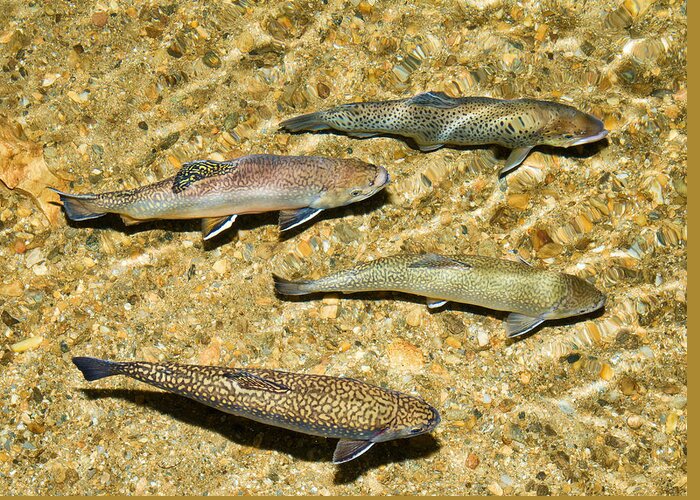
One of the most interesting inhabitants of Linville Caverns is the blind cave trout. Adapted to total darkness, these fish have limited pigmentation and reduced eyesight. They are a rare example of specialized cave dwelling wildlife in North Carolina.
Tours and Accessibility
Linville Caverns operates guided tours only, typically running every twenty to thirty minutes during open hours. Tours last approximately thirty five to forty five minutes and cover the main accessible areas of the cavern.
The pathways are generally manageable, but there are uneven surfaces, narrow passages, and occasional low ceilings. Comfortable walking shoes are strongly advised. The cavern is not fully wheelchair accessible due to natural terrain limitations.
Because it is a natural environment, humidity can be high and surfaces may be damp. Safety railings and lighting are installed to assist visitors while preserving the integrity of the formations.
Educational Value
Beyond its visual appeal, Linville Caverns serves as an educational site for geology, hydrology, and biology. School groups and families often visit to learn about:
Karst topography
Limestone dissolution processes
Mineral deposition
Groundwater systems
Cave ecosystems
The guided format allows visitors to ask questions and gain deeper understanding of how long term natural forces shape the landscape of Western North Carolina.
Location and Nearby Attractions
Linville Caverns is located at 19929 U.S. 221 North, Marion, North Carolina. Its proximity to the Blue Ridge Parkway, Linville Falls, Linville Gorge, and Lake James makes it easy to combine with other outdoor adventures.
Many visitors pair a morning cave tour with an afternoon hike or scenic drive. It is a particularly appealing option on hot summer days or rainy afternoons when outdoor plans need adjustment.
Why It Matters
Linville Caverns offers something rare in a region known primarily for mountains and waterfalls. It invites you underground. It reminds you that the most dramatic landscapes are not always visible from a scenic overlook.
The cavern reflects the broader story of McDowell County and the Blue Ridge region. Ancient geology. Flowing water. Quiet resilience. Slow formation over immense time.
If you are exploring the Marion area, Linville Caverns is not just a quick stop. It is a journey into deep time, shaped by patience and preserved for future generations.
And if spending time in places like this makes you think about calling the mountains home, Fletcher Edens and Bryan Jones have been selling real estate on Lake James since 2003. As North Carolina State University graduates and proud Wolfpack fans, we appreciate both solid foundations and dramatic landscapes. We serve clients throughout Marion and the Lake James area while strictly following North Carolina real estate regulations and fair housing laws.
To learn more about living near Marion and Lake James, visit www.lakejames.com or reach out to start the conversation.
Fletcher Edens and Bryan Jones
Keller Williams Unified The Lake James Team
www.lakejames.com
#LinvilleCaverns, #MarionNC, #WesternNorthCarolina, #BlueRidgeMountains, #LakeJamesLiving, #NCRealEstate, #KellerWilliamsUnified, #WolfpackNation